
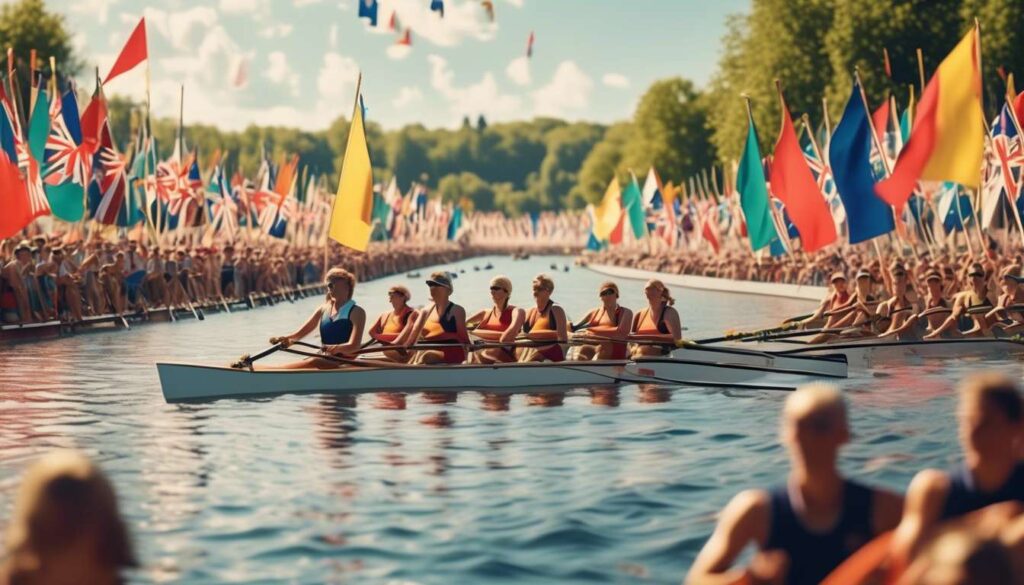
Rowing has long been a sport that captivates our collective spirit, blending strength, strategy, and synchronization. As enthusiasts of this timeless sport, we find ourselves drawn to the water, eager to explore the myriad of boat classes that define competitive rowing events.
In this article, we dive into the diverse world of rowing, shedding light on the distinct boat classes that make each race unique. From the swift single sculls to the powerful eights, each class offers its own set of challenges and thrills.
Together, we’ll unravel the nuances of:
-
Sweep Rowing: Where each rower has one oar, and teamwork is crucial.
-
Sculling: Where each rower uses two oars, requiring individual skill and balance.
The strategic intricacies involved in each discipline add layers of complexity and excitement. Whether we are seasoned rowers or newcomers eager to learn, a deeper understanding of these boat classes enhances our appreciation for the sport and the athletes who dedicate themselves to mastering it.
So, let’s immerse ourselves in the rhythmic dance of oars and water, and discover what makes each rowing event a captivating spectacle.
Sweep Rowing: The Essence of Teamwork
In sweep rowing, we each grasp a single oar, synchronizing our movements to harness the power of teamwork. This harmony is the heartbeat of our boat, uniting us in a shared rhythm as we glide across the water.
Unlike sculling, where rowers handle two oars individually, sweep rowing demands that we rely on each other, creating a unique bond. It’s this reliance that fuels our desire to belong, as we push and pull in perfect unison.
The camaraderie we experience in sweep rowing is unmatched. Each stroke is a testament to our collective strength and trust. We learn to anticipate each other’s movements, adjusting seamlessly to maintain balance and speed.
- It’s not just about physical prowess.
- It’s about communication and understanding without words.
Together, we move as one, our spirits intertwined, making every race a celebration of our teamwork. In the boat, we’re more than teammates—we’re a family, united by our shared passion for the sport.
Sculling: Mastering Balance and Skill
In sculling, each of us wields two oars, honing our balance and precision to navigate the water with skillful finesse.
Unlike sweep rowing, where each person manages one oar, sculling demands that we embrace our independence while still thriving on a shared rhythm.
Our coordination is crucial, connecting us to the boat and each other, fostering a unique sense of unity and belonging.
Sculling requires mastery over not just physical strength but also the mental agility to synchronize our movements. This discipline challenges us to find harmony within ourselves and with our teammates, as we collectively aim for fluidity and speed.
The balance we achieve is not just physical; it’s a testament to our teamwork and shared dedication.
Together, we glide over the water, each stroke a seamless blend of individual skill and collective effort.
In sculling, we celebrate our individuality while cherishing the shared experience, creating a bond that’s as strong as the strokes we take.
Single Sculls: Solo Precision on Water
In single sculls, we embrace the challenge of navigating the water alone, relying solely on our skill and precision.
It’s a unique experience that connects us deeply with the water, demanding the utmost in personal mastery. While sweep rowing involves teamwork, single sculling is a solitary endeavor where we find unity within ourselves, blending balance and technique to glide effortlessly across the surface.
When we take to the water in a single scull:
- The absence of teammates doesn’t isolate us.
- It reinforces our connection to the broader rowing community.
- Each sculler understands the solitary dedication required.
We’re part of a larger family that values individual growth alongside collective spirit.
The beauty of single sculling lies in its simplicity.
Every stroke we make is a testament to our personal journey, yet it’s also a reflection of the skills shared and honed within our community. Together, we celebrate the precision and grace that define single sculls.
Double Sculls: Synchronizing in Pairs
In double sculls, we embrace the challenge of synchronizing our movements, creating harmony and power as we glide together across the water.
Unlike sweep rowing, where each rower handles one oar, sculling requires both of us to manage two oars each. This demands a higher degree of coordination and trust.
In double sculls, teamwork isn’t just a concept; it’s the core of our performance. Each stroke must be in perfect unison, our timing impeccable, to maintain speed and balance.
We find a rhythm that transcends individual effort, merging our strengths into a collective force. Our communication goes beyond words, relying on subtle cues and shared understanding.
As we push through the resistance of the water, we feel the reward of our synergy. This connection forms a bond, a sense of belonging to something greater than ourselves.
Together, we transform the challenge of sculling into a beautiful dance on water, driven by our shared goals and mutual respect.
Quadruple Sculls: Team Effort in Harmony
In quadruple sculls, we harness the power of four rowers working in perfect harmony to glide swiftly across the water. Unlike sweep rowing, where each rower holds one oar, in sculling, we each manage two. This allows for a balanced distribution of strength and rhythm, creating a seamless dance on the water’s surface.
- We lean on each other’s strengths
- Trusting that our teamwork will propel us forward
In our shared pursuit, we find a sense of belonging. The boat becomes our haven, where every stroke is a testament to our unity. We synchronize our movements, listening to the gentle rhythm of the oars slicing through the water, our hearts beating as one.
This connection fosters a deep camaraderie that transcends the physical demands of the sport.
Together, we celebrate every triumph and learn from each challenge, knowing that our collective effort defines our success. In the world of quadruple sculls, we’re more than a team; we’re family.
Coxless Pairs: Two Hearts, One Boat
In coxless pairs, we rely solely on each other’s instincts and coordination to master the art of rowing without guidance. Unlike sculling, where each rower uses two oars, sweep rowing in coxless pairs requires each of us to handle one oar, making teamwork paramount.
Our success hinges on the silent communication and mutual trust we’ve built over countless hours on the water. Together, we become a single unit, synchronizing our strokes and breathing in unison to glide efficiently through the water.
Each race challenges us to push our limits, relying on our bond to maintain balance and speed. Every stroke is a testament to our connection, a dance of precision and power. We don’t just row; we embody the spirit of partnership.
In this intimate boat class, we find belonging in the rhythm we create together, a reminder that in this shared journey, we’re never alone. Here, our hearts beat as one, united in purpose and passion.
Coxed Pairs: Coordination in Tandem
In coxed pairs, we rely on a third person, the coxswain, to steer and motivate while we focus on perfecting our strokes. This dynamic is unique in sweep rowing, where each of us handles one oar, unlike sculling where rowers manage two.
The coxswain’s role is crucial, providing guidance and encouragement that keeps us synchronized. We become a cohesive unit, our efforts seamlessly blending as we chase the finish line together.
Teamwork is the heart of coxed pairs. The coxswain calls out commands, helping us maintain rhythm and pace. We build a bond as we strive to harmonize our movements, trusting the coxswain to navigate, so we can concentrate on delivering powerful strokes.
Communication becomes our lifeline, fostering a sense of belonging and shared purpose.
As we row, the water becomes our shared path, each stroke a testament to our unity. Together, we push boundaries, our teamwork propelling us forward.
In these moments, we’re not just rowers, but a tightly knit team.
Eights: Power and Precision Combined
In eights, we harness the sheer force of eight rowers and the strategic guidance of a coxswain to achieve both power and precision on the water. This is sweep rowing at its finest, where each of us pulls together, driving our oars through the water in perfect unison.
Sweep Rowing vs. Sculling:
- In sweep rowing, each rower uses a single oar.
- In sculling, rowers use two oars each.
This distinct setup in eights demands a unique kind of teamwork.
Role of the Coxswain:
- The coxswain is the heartbeat of the boat.
- They call out commands and set the pace.
- We rely on their sharp instincts to steer us with precision.
Team Dynamics:
- As a crew, we move as one, each stroke a testament to our shared commitment and trust.
- The boat surges forward, and in those moments, we feel the strength of our community.
The Result:
Together, we find a rhythm that transcends individual effort, creating something truly remarkable.
What is the historical origin of rowing as a competitive sport?
Rowing as a Competitive Sport
Rowing has a rich historical origin dating back to ancient civilizations. It evolved from a means of transportation into a thrilling race of strength and skill.
Our ancestors across different cultures found joy in testing their abilities on the water.
Enduring Appeal
The competitive spirit and camaraderie that rowing fosters have stood the test of time, making it a beloved sport worldwide.
How are rowing boats classified in terms of weight and design?
Rowing Boat Classifications
Rowing boats are classified based on two main factors: weight and design.
Weight Categories:
- Weight categories ensure fair competition among rowers.
- Boats typically fall into categories such as:
- Lightweight
- Heavyweight
Design Factors:
- Design significantly influences a boat’s:
- Speed
- Stability
- Maneuverability
Understanding these classifications is crucial for rowers as they strive for success in their respective events.
What are the key differences between indoor rowing machines and actual water rowing?
Comparison of Indoor Rowing Machines to Water Rowing
Key Differences:
- Environment and Feel:
- Indoor Rowing: Provides a controlled setting that allows for focused workouts without external distractions.
- Water Rowing: Offers exposure to natural elements and the dynamics of working with a team on the water.
Advantages of Indoor Rowing:
- Convenience:
- Allows for consistent training regardless of weather or time of day.
- Eliminates the need for travel to a body of water.
Advantages of Water Rowing:
-
Connection to Nature:
- Engages rowers with the serene and ever-changing natural environment.
-
Camaraderie:
- Fosters teamwork and collective effort among teammates, enhancing the rowing experience in ways that indoor rowing cannot replicate.
In summary, while indoor rowing focuses on the practicality and consistency of workouts, water rowing emphasizes the unique experience of connecting with nature and building team spirit.
Conclusion
Now that you’ve explored the various boat classes in rowing events, you have a deeper understanding of the teamwork, skill, and coordination required in this sport.
Whether you prefer the solo precision of single sculls or the synchronized efforts of quadruple sculls, each boat class offers a unique challenge and opportunity for growth.
So next time you watch a rowing race, you’ll have a newfound appreciation for the power and precision displayed by the athletes on the water.